
 We arrived Guilin by plane from Xi’an. From the air we could see that the region was full of lush and green nature, small hat-shaped mountain hills, beautiful curvy rivers, and farmland. Guilin city has more or less the same size as Oslo in Norway regarding inhabitants but when we count the greater outskirts of it, it numbers nearly 5 million people. They farm lots of local fruits, spices and rice. Still the main industry is the production of medicine, textiles, electronics, food (including fish) products and rubber. Our second night in Guilin we had the pleasure of tasting freshly squeezed bamboo juice and it was surprisingly sweet and quite good. We also ate local dishes which included tiny shrimp in their shells. Guilin is famous for its grand nature, Li River, beautiful caves and rice terraces.
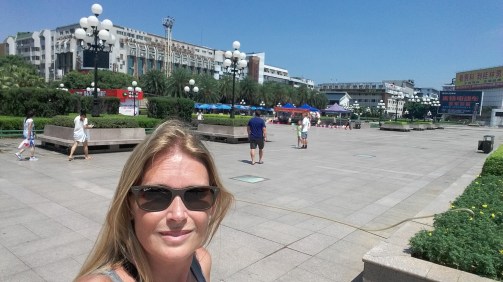
Guilin city center


 We arrived Xian by bullet train after 6 hours from Beijing. On our trip we could see a beautiful landscape with lots of green hills, mountains, rice fields, flowers, rural villages and urban cities. In the middle of Xi’an there is a very nice green park and riverlike moat outside the old city walls. The walls are rectangular and measures around 15 km. Since Xi’an is one of Chinas old capitals for many centuries it is understandable that they built these walls, but what a huge effort they must have laid into building them… We spent 2 hours biking in the sun on top of them – a great experience – but we were quite tired afterwards. Another attraction right outside Xi’an we were lucky to visit was the 2 500 Terracotta Warriors. Amazing!! What details and precision! Last thing we did was to watch a cultural show inside the ancient city walls – just fantastic – both regarding acting, music and colours we were astonished.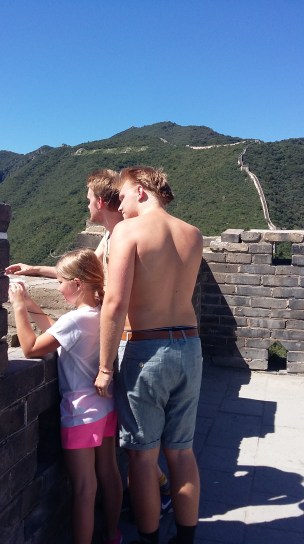
 The Temple of Heaven


 Worldwide Family Tour